Protective Puts and Covered Calls
Options Advanced About 6 min Audio free Video · Premium
The two classic stock-plus-option structures: insurance below, income above.
Watch your teacher
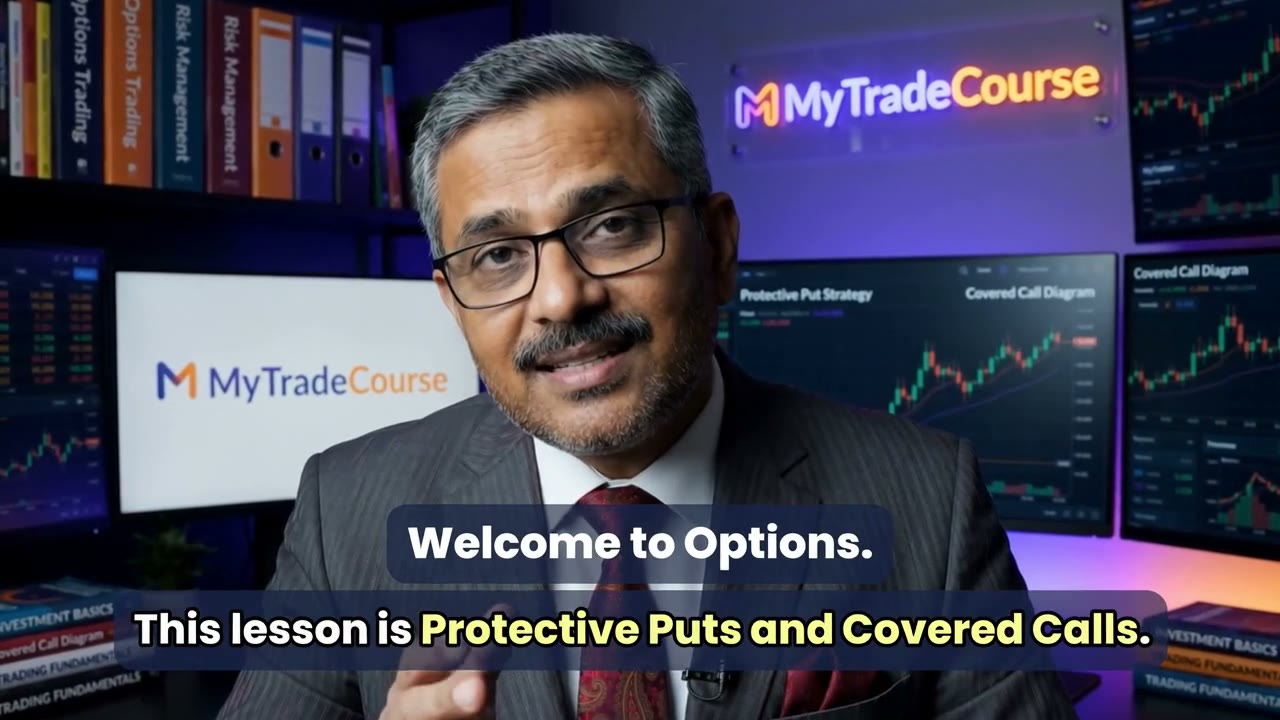
This video is part of Premium
Premium is not open yet. No Premium price is shown and nothing is charged until the owner opens it. The full lesson is below, and the audio is free right now.
Listen — free
The teacher's voice for this lesson (1:00). This lesson's audio is free.
Read the transcript
Welcome to Options. This lesson is Protective Puts and Covered Calls. A protective put is buying a put option on stock you own. It sets a floor price, so if the stock drops, the put limits your loss. You pay a premium for that protection. The put gives you the right to sell at the strike price, no matter how low the stock goes. A covered call is selling a call option on stock you own. You collect premium, but you agree you might sell the stock if it rises above the strike. Both tools trade upside or downside coverage. Use puts to protect, calls to generate income, and know what you give up in each case. Remember: puts guard downside, calls can add income. Now — try the quick quiz.
Protective put: a floor with a price tag
Own 100 shares, buy one put below the price: your position cannot fall below the strike (minus premium) until expiry. It is portfolio insurance with a deductible set by the strike distance and a premium set by time and volatility. Long-term holders use it around events they cannot afford to ride through unprotected.
Covered call: renting out your upside
Own 100 shares, sell one call above the price: collect premium immediately. If the stock stays below the strike, you keep shares and premium — repeat monthly for income. If it rockets past the strike, your shares are called away at the strike: gains capped. The risk picture stays mostly 'stock owner' — a crash still hurts nearly in full, softened only by the premium.
Choosing between them
Protective puts pay out in disasters and cost steadily in calm — defense. Covered calls pay steadily in calm and flat markets and give back upside in rallies — income with a ceiling. Many holders combine the logic (a collar: put below, call above) to fund the insurance with the income leg. Match the structure to the fear you actually have.
Worked example — covered call outcomes
You own shares at $90, now $100. Sell a $110 call for $2.00. Stock ends at $104: call expires, you keep the $2 and the shares — an extra 2% from a quiet month. Stock ends at $118: shares are sold at $110; your total is $110 + $2 = $112 vs $118 unhedged. The premium was payment for the upside you surrendered — fair trade, made knowingly.
Remember this
- Protective put = a hard floor under shares, for a premium.
- Covered call = income now, upside capped at the strike.
- Neither removes stock risk entirely — they reshape it.
- A collar funds the put by selling the call.
Check what you learned
Completion marks are saved on this device only.
SEO used on this page
| Page title | Set — Protective Puts and Covered Calls — Options | MyTradeCourse |
|---|---|
| Meta description | Set — The two classic stock-plus-option structures: insurance below, income above. |
| Share picture | Set — https://mytradecourse.com/media/thumbs/mytradecourse-options-protective-covered-lesson-thumbnail.jpg |
| Audio file | Set — /media/audio/mytradecourse-options-protective-covered-lesson-audio.mp3 |
| Video file | Set — mytradecourse-options-protective-covered-lesson.mp4 (Premium) |
| Captions | Set — /media/captions/mytradecourse-options-protective-covered-lesson-captions.vtt |
| Transcript | Set — shown on this page under Listen |
| Structured data | Set — LearningResource + VideoObject |