Expiry, Rollover, and Contract Months
Futures Intermediate About 5 min Audio free Video · Premium
Every contract has a last day. Manage it, or the calendar manages you.
Watch your teacher
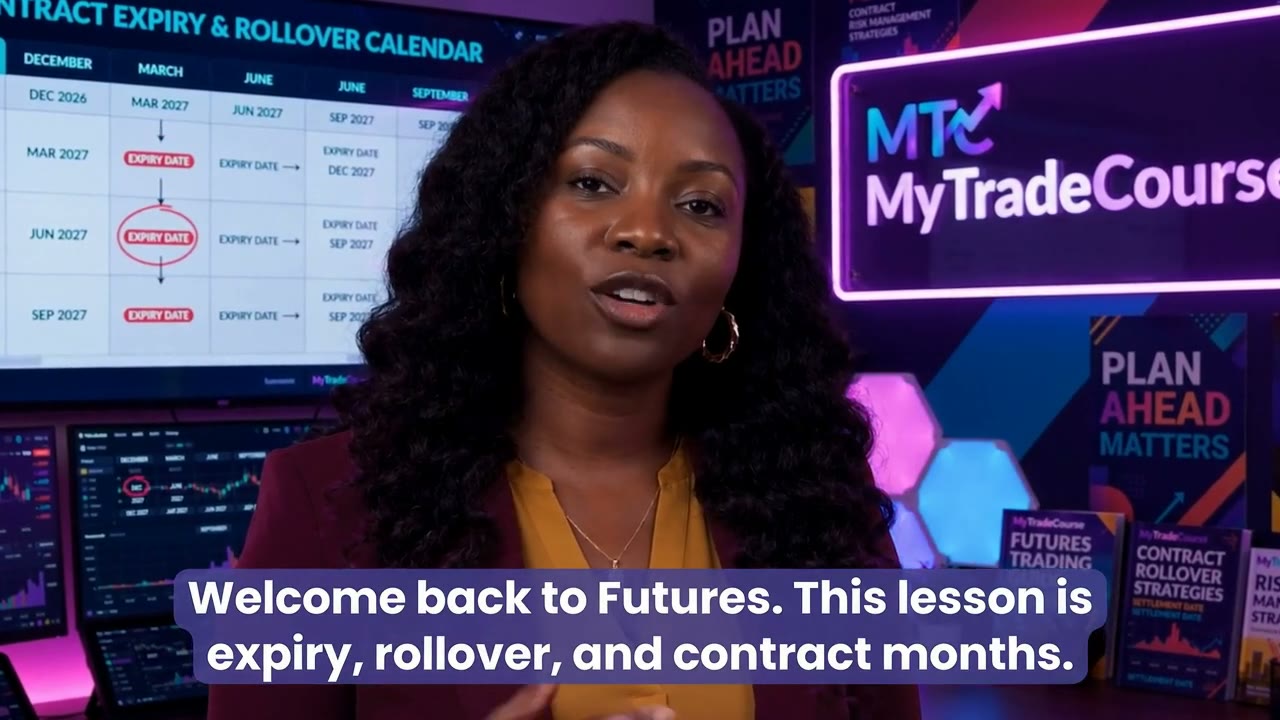
This video is part of Premium
Premium is not open yet. No Premium price is shown and nothing is charged until the owner opens it. The full lesson is below, and the audio is free right now.
Listen — free
The teacher's voice for this lesson (1:00). This lesson's audio is free.
Read the transcript
Welcome back to Futures. This lesson is expiry, rollover, and contract months. Every futures contract has an end date — and what you do before it matters. Expiry is the date a futures contract stops trading and must be settled. After the last trading day, you cannot keep holding that same contract — it ends, by its standard terms. Contract months are the different expiry dates available for the same market. One market may offer contracts expiring in different months, each with its own price and its own last trading day. Rollover means closing your position in the contract that is about to expire and opening the same position in a later contract month, so your exposure continues without running into expiry. Plan the roll early. As expiry gets close, trading often moves to the next month, volume in the old contract thins, and waiting until the last day can mean messy prices and a rushed decision. Remember: expiry is when a contract ends, contract months are its different end dates, and rollover is moving to a later month before the old one expires. Now — try the quick quiz.
The expiry clock
Each contract names its month — March, June, September, December for many financial futures; monthly for energy. As the last trading day approaches, liquidity migrates to the next month and the expiring contract gets thinner and jumpier. Physical-delivery contracts add a harder deadline: hold too long and you can be assigned actual delivery obligations.
Rolling a position
To keep exposure past expiry you roll: close the expiring contract and open the same position in the next month, usually as a single spread order. The price difference between the two months (the calendar spread) is your roll cost or credit. Funds and long-term traders roll on a schedule, not in a panic during the final days.
Contango and backwardation
When later months cost more than near months, the curve is in contango — common for storable commodities, and a slow headwind for anyone repeatedly rolling long positions. When later months are cheaper, backwardation, rollers may be paid instead. The shape of the curve is part of a futures trade's true cost, invisible on a spot chart.
Worked example — a roll
You are long the June contract at 4,200 with expiry Friday, and September trades at 4,212. Rolling means selling June and buying September at +12 points over. Hold that habit for a year of quarterly rolls in contango and the small gaps add up to a real drag — a cost stock and spot traders never face.
Remember this
- Know your contract's last trading day before you enter.
- Rolling = close the old month, open the next, paying the spread between them.
- Contango makes long rolls costly; backwardation can pay them.
- Physical delivery is a deadline, not a surprise — leave early.
Check what you learned
Completion marks are saved on this device only.
SEO used on this page
| Page title | Set — Expiry, Rollover, and Contract Months — Futures | MyTradeCourse |
|---|---|
| Meta description | Set — Every contract has a last day. Manage it, or the calendar manages you. |
| Share picture | Set — https://mytradecourse.com/media/thumbs/mytradecourse-futures-expiry-lesson-thumbnail.jpg |
| Audio file | Set — /media/audio/mytradecourse-futures-expiry-lesson-audio.mp3 |
| Video file | Set — mytradecourse-futures-expiry-lesson.mp4 (Premium) |
| Captions | Set — /media/captions/mytradecourse-futures-expiry-lesson-captions.vtt |
| Transcript | Set — shown on this page under Listen |
| Structured data | Set — LearningResource + VideoObject |