Leverage and Margin in Forex
Forex Beginner About 6 min Audio free Video · Premium
Borrowed buying power: how a small deposit controls a big position, and how it bites.
Watch your teacher
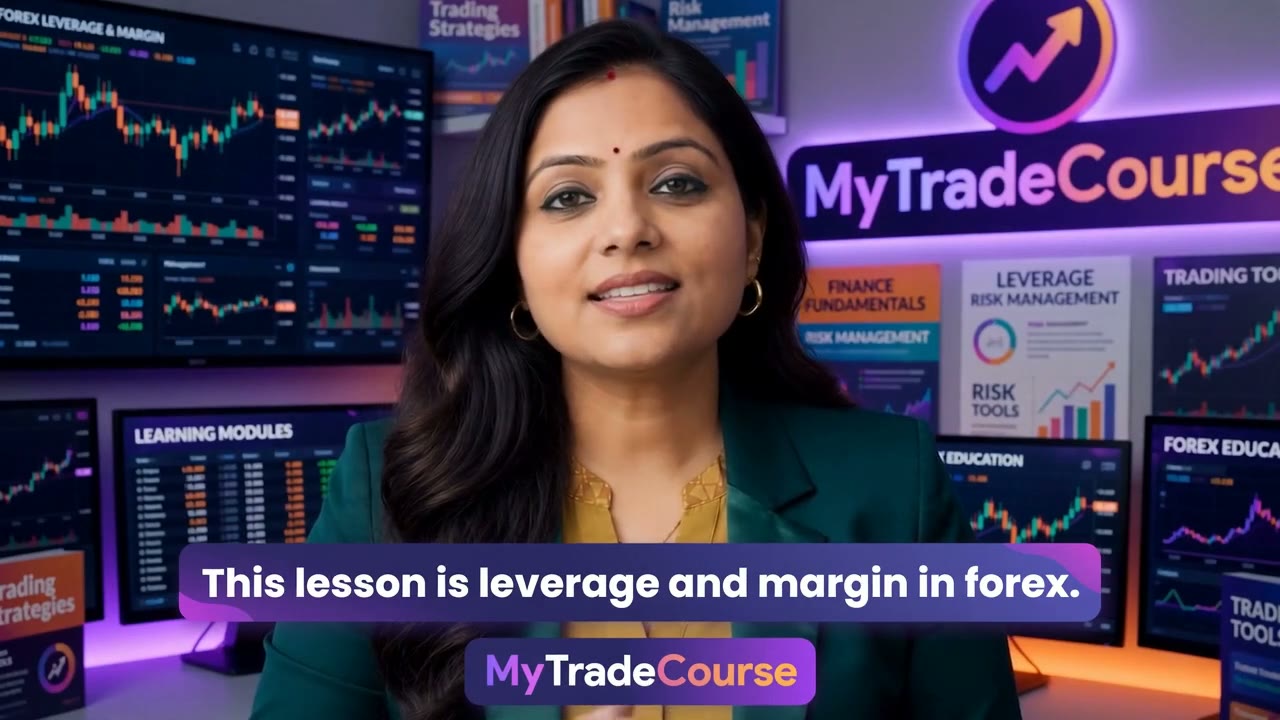
This video is part of Premium
Premium is not open yet. No Premium price is shown and nothing is charged until the owner opens it. The full lesson is below, and the audio is free right now.
Listen — free
The teacher's voice for this lesson (1:00). This lesson's audio is free.
Read the transcript
Welcome back to Forex. This lesson is leverage and margin in forex. Leverage lets a small deposit control a larger position. The price move counts on the full position size. That is why moves feel bigger. Margin is the deposit you must keep to open the trade. Your broker holds that amount aside. It is not a fee, it is a requirement. A simple example in plain numbers. If leverage is ten to one, a ten unit deposit controls one hundred units. A one percent move on one hundred is one unit. That same math cuts both ways. A move against you also counts on the full size. Keep leverage low while you learn, and size from your plan. Remember — leverage magnifies moves, margin is the deposit to hold them. Now — try the quick quiz.
Margin is a deposit, leverage is the ratio
Margin is the good-faith deposit your broker locks while a leveraged trade is open. Leverage states the ratio: at 50:1, a $1,000 deposit controls a $50,000 position. Forex offers high leverage because currency moves are usually small — a typical day in a major pair is well under 1% — so leverage exists to make small moves meaningful.
Leverage multiplies everything
Leverage multiplies gains and losses identically, and it multiplies the speed at which you can be forced out. A 2% adverse move against a 50:1 position wipes the margin that controls it. The pip value math from Lesson 2 does not change — leverage just lets you hold a lot size far bigger than your cash would otherwise allow.
Margin calls and stop-outs
If losses eat your free margin below the broker's maintenance level, you get a margin call (add funds or close trades), and if it falls further the broker auto-closes positions — the stop-out — usually starting with the worst loser, at whatever price is available. Professional rule: choose position size so a normal losing streak never gets you near that level. Leverage offered is not leverage to use.
Worked example — 50:1 both ways
With $2,000 margin at 50:1 you control $100,000 — one standard lot of EUR/USD, ~$10 per pip. Price rises 40 pips: +$400, a 20% account gain. Price falls 40 pips: −$400. Falls 180 pips: −$1,800, and the broker's stop-out likely closes you before −200. Same market, three outcomes — the lot size chose which story you lived.
Remember this
- Margin = locked deposit; leverage = position ÷ deposit.
- Leverage multiplies gains, losses, and speed of ruin equally.
- Stop-outs close your trades at the worst moment by design.
- Use a fraction of the leverage offered; size by risk, not by max available.
Check what you learned
Completion marks are saved on this device only.
SEO used on this page
| Page title | Set — Leverage and Margin in Forex — Forex | MyTradeCourse |
|---|---|
| Meta description | Set — Borrowed buying power: how a small deposit controls a big position, and how it bites. |
| Share picture | Set — https://mytradecourse.com/media/thumbs/mytradecourse-forex-leverage-lesson-thumbnail.jpg |
| Audio file | Set — /media/audio/mytradecourse-forex-leverage-lesson-audio.mp3 |
| Video file | Set — mytradecourse-forex-leverage-lesson.mp4 (Premium) |
| Captions | Set — /media/captions/mytradecourse-forex-leverage-lesson-captions.vtt |
| Transcript | Set — shown on this page under Listen |
| Structured data | Set — LearningResource + VideoObject |