Time Decay and Implied Volatility
Options Intermediate About 6 min Audio free Video · Premium
Theta takes rent every day; IV sets the price of the whole building.
Watch your teacher
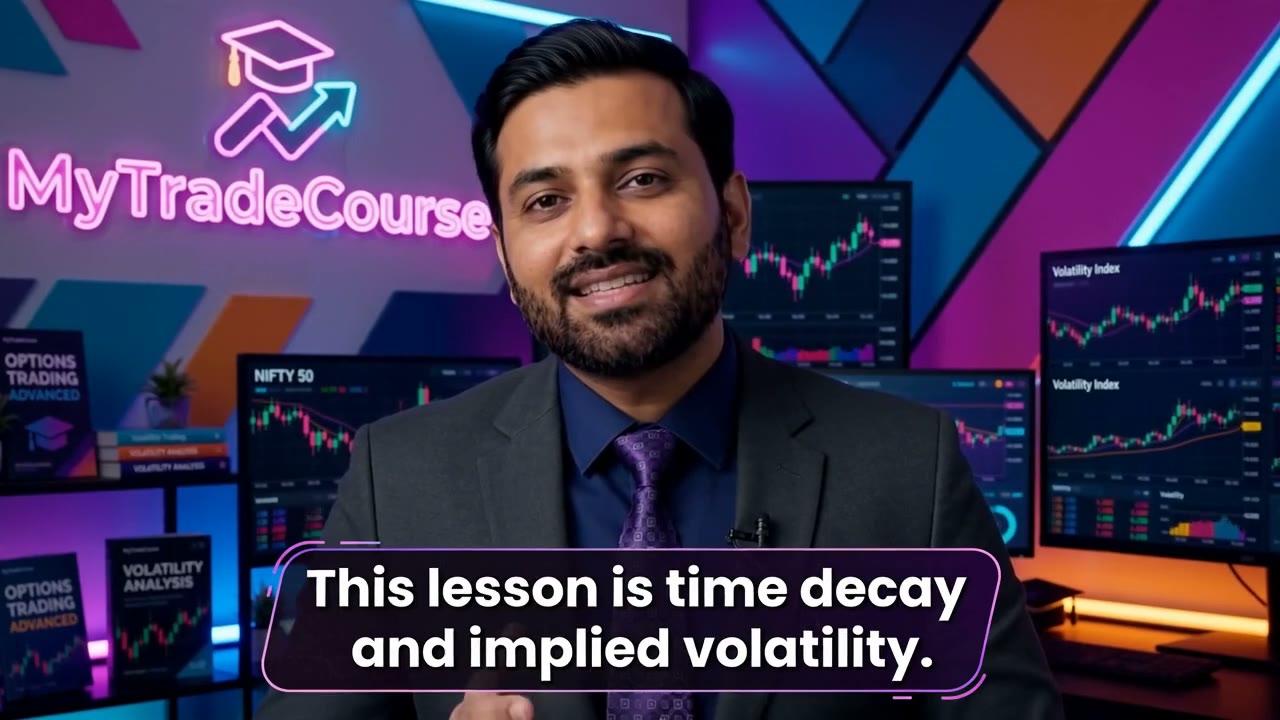
This video is part of Premium
Premium is not open yet. No Premium price is shown and nothing is charged until the owner opens it. The full lesson is below, and the audio is free right now.
Listen — free
The teacher's voice for this lesson (1:00). This lesson's audio is free.
Read the transcript
Welcome back to Options. This lesson is time decay and implied volatility. Time decay means an option loses value as time passes. Each day brings expiry closer. The time part of the premium shrinks. This shrinkage is called theta in the Greeks. You do not need the math yet. Just know time works against the buyer. Implied volatility is how much move the market expects. It is built into the premium. Higher expected moves mean higher premiums. Both affect price, not just direction. An option can lose value from time decay. It can also lose value if expected moves fall. Remember — time shrinks value, and volatility moves the premium. Now — try the quick quiz.
Theta: the daily rent
Options lose extrinsic value as time passes — theta decay. It is slow for long-dated options and brutal in the final weeks, which is why short-dated OTM options melt even when the stock cooperates a little. Buyers fight the clock; sellers collect it. Before buying any option, check its theta: that is roughly what standing still costs you per day.
Implied volatility: the market's fear gauge, priced in
Implied volatility (IV) is the future volatility baked into option prices. Before earnings or big events, IV inflates — options get expensive because a big move is expected. After the event, IV often collapses ('IV crush'), and options can lose value even when the stock moved in your direction, because the expected-move premium left the price.
Buying cheap vs buying dear
The question is never just 'will it move?' but 'will it move more than the price already expects?' Buying options when IV is historically low in that underlying means paying little for movement; buying at peak IV means the move must be large just to break even. Compare current IV to its own history (IV rank/percentile) before every purchase.
Worked example — the crush
Before earnings, a call costs $4.00 with the stock at $100. Earnings land well and the stock jumps to $104 — yet the call now trades at $3.10. Direction: right. Profit: none. IV collapsed from 60% to 25% overnight, draining extrinsic value faster than the price gain added intrinsic value. The options market had already priced a bigger party.
Remember this
- Theta decay accelerates into expiry — buyers rent time by the day.
- IV is the expected move, embedded in the premium.
- IV crush after events can defeat a correct direction call.
- Compare IV to its own history before buying options.
Check what you learned
Completion marks are saved on this device only.
SEO used on this page
| Page title | Set — Time Decay and Implied Volatility — Options | MyTradeCourse |
|---|---|
| Meta description | Set — Theta takes rent every day; IV sets the price of the whole building. |
| Share picture | Set — https://mytradecourse.com/media/thumbs/mytradecourse-options-time-decay-lesson-thumbnail.jpg |
| Audio file | Set — /media/audio/mytradecourse-options-time-decay-lesson-audio.mp3 |
| Video file | Set — mytradecourse-options-time-decay-lesson.mp4 (Premium) |
| Captions | Set — /media/captions/mytradecourse-options-time-decay-lesson-captions.vtt |
| Transcript | Set — shown on this page under Listen |
| Structured data | Set — LearningResource + VideoObject |