Calls and Puts: The Two Building Blocks
Options Beginner About 6 min Audio free Video · Premium
A call is a right to buy; a put is a right to sell. Everything else is assembly.
Watch your teacher
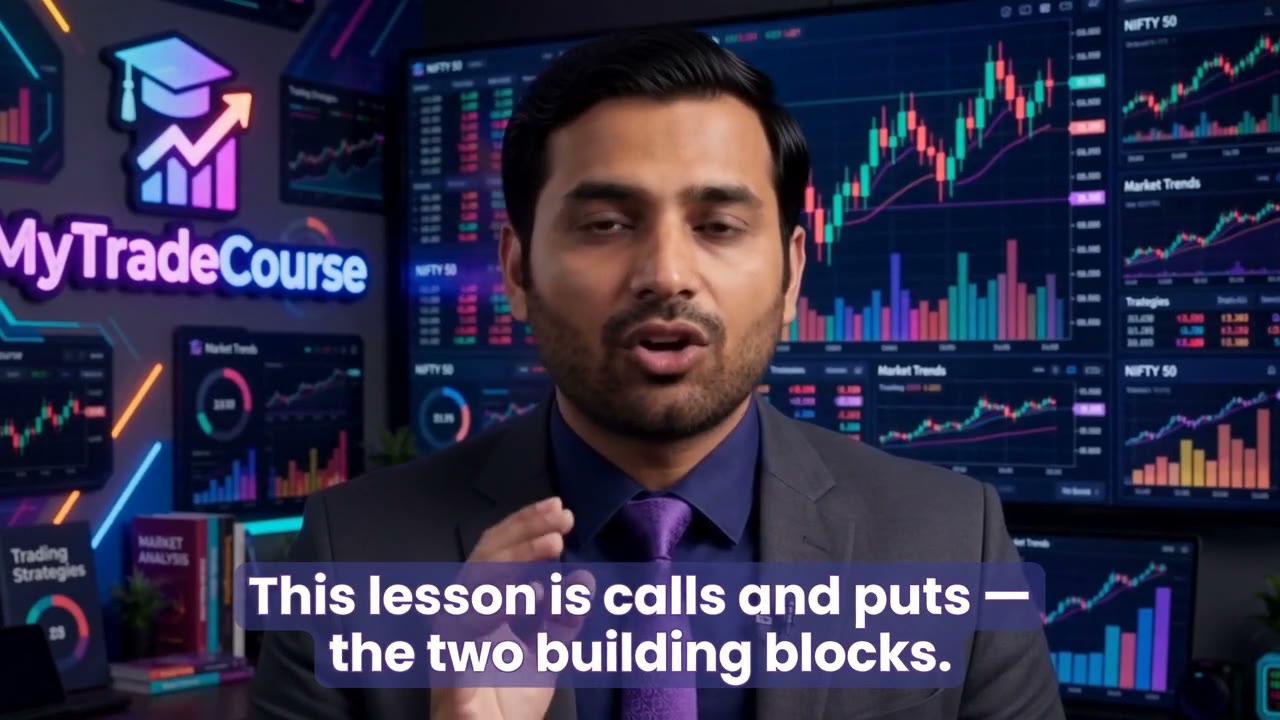
This video is part of Premium
Premium is not open yet. No Premium price is shown and nothing is charged until the owner opens it. The full lesson is below, and the audio is free right now.
Listen — free
The teacher's voice for this lesson (1:00). This lesson's audio is free.
Read the transcript
Welcome to Options. This lesson is calls and puts — the two building blocks. A call option gives its buyer the right to buy. The right is to buy at a set price. That set price is called the strike price. A put option gives its buyer the right to sell. The right is to sell at the strike price. Calls are about buying. Puts are about selling. Every option has an expiry date. The right lasts only until that date. After expiry, the option ends and the right is gone. The buyer pays a price for that right. That price is called the premium. The seller receives the premium. The seller takes on the duty if the buyer uses the right. Remember — calls give the right to buy, puts give the right to sell. Now — try the quick quiz.
The call: right to buy
A call option gives its buyer the right to buy 100 shares (for standard stock options) at a fixed strike price, any time until expiry. You pay a premium for that right. If the stock soars, your right becomes valuable; if it falls, the call can expire worthless and you lose only the premium. The seller of the call takes the opposite obligation.
The put: right to sell
A put gives the right to sell 100 shares at the strike until expiry. Puts gain value as the stock falls. Owners of shares buy puts as insurance — a floor under their position for a known cost. Like any insurance, the premium is spent happily in quiet times and gratefully in a crash.
Buyer vs seller: risk flips sides
Buyers risk at most the premium paid and have open-ended potential (calls) or large potential (puts). Sellers collect the premium but accept the obligation — potentially large or even unlimited risk for naked calls. Every options position is one of four: long call, short call, long put, short put. Name yours before you place it.
Worked example — one call
Stock at $50. You buy a $55 call expiring in 60 days for $2.00 per share — $200 total for the contract (100 shares). Stock reaches $63 by expiry: the right to buy at $55 is worth $8 per share; your $200 became $800. Stock ends at $54: the call expires worthless despite the stock rising — being right about direction but short on size and time still loses.
Remember this
- Call = right to buy at the strike; put = right to sell at the strike.
- Standard contracts control 100 shares; premium is quoted per share.
- Buyers' max loss is the premium. Sellers carry the obligation.
- Direction, distance, and time must all cooperate for buyers.
Check what you learned
Completion marks are saved on this device only.
SEO used on this page
| Page title | Set — Calls and Puts: The Two Building Blocks — Options | MyTradeCourse |
|---|---|
| Meta description | Set — A call is a right to buy; a put is a right to sell. Everything else is assembly. |
| Share picture | Set — https://mytradecourse.com/media/thumbs/mytradecourse-options-calls-puts-lesson-thumbnail.jpg |
| Audio file | Set — /media/audio/mytradecourse-options-calls-puts-lesson-audio.mp3 |
| Video file | Set — mytradecourse-options-calls-puts-lesson.mp4 (Premium) |
| Captions | Set — /media/captions/mytradecourse-options-calls-puts-lesson-captions.vtt |
| Transcript | Set — shown on this page under Listen |
| Structured data | Set — LearningResource + VideoObject |