Trading the Open: The First 30 Minutes
Futures Intermediate About 5 min Audio free Video · Premium
The cash open concentrates a day's worth of emotion into minutes. A plan for it is mostly a plan for restraint.
Watch your teacher
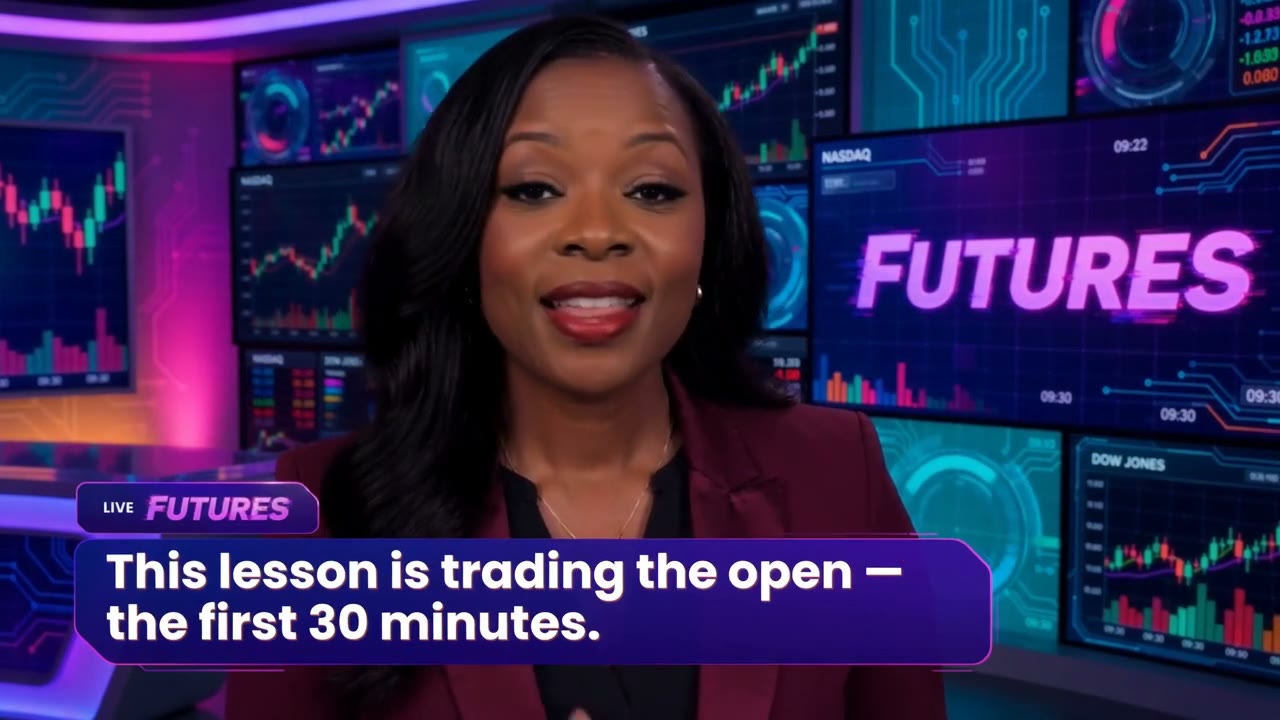
This video is part of Premium
Premium is not open yet. No Premium price is shown and nothing is charged until the owner opens it. The full lesson is below, and the audio is free right now.
Listen — free
The teacher's voice for this lesson (1:00). This lesson's audio is free.
Read the transcript
Welcome back to Futures. This lesson is trading the open — the first 30 minutes. The open is the first minutes after a futures market starts its main session. Orders that built up overnight meet the market at once, so trading is busy right away. Price can move fast in those first 30 minutes. News from overnight, opening orders, and traders reacting together can push price one way, then quickly back the other way. Prepare before the open, not during it. Check overnight news, mark the levels you already know from your plan, and note any reports due that morning. Then follow a simple routine. Watch first, let the opening rush settle, and only act when price and your plan line up. The open rewards patience, not speed. Remember — the first 30 minutes are fast, so plan before the open. Now — try the quick quiz.
Why the open is violent
Overnight news, earnings, and global moves all queue up for the 9:30 ET cash open (index futures react at their own key opens too — 8:30 ET economic releases hit first). Institutional orders execute benchmarks at the open; stops cluster at overnight highs and lows; spreads widen and the book thins in the first minutes. Range in the first 15 minutes routinely exceeds a normal full hour later in the day.
The opening range as a map
Many day traders simply observe the first 15–30 minutes, marking its high and low as the opening range — the day's first agreed battlefield. A later break and hold beyond it suggests initiative traders are in control; repeated failure back inside suggests a rotational day where fades, not chases, fit. Either way, the observation period converts chaos into a labeled map before capital is committed.
Rules that keep the open survivable
Common professional constraints: no entries in the first 5 minutes; reduced size until the range is set; never chase a vertical move — wait for the first pullback and judge it; a hard daily loss limit that counts double-weighted early losses (an open gone wrong ends the day, not just the hour). The open rewards the prepared and taxes the eager.
Worked example — observing first
Index futures gap up on a hot jobs print, spike 18 points in four minutes, then fall back through the open print. A chaser buys minute 3 near the top and is stopped −10 points. The observer marks the 9:30–10:00 range, sees the break fail, and trades the afternoon rotation with 3-point stops. Same day, same market — the difference was 30 minutes of watching before risking.
Try it yourself
For one week, paper-trade only the observation: mark the opening range each day in one index future, and in MyTradeDiary (free) record whether the break held or failed. No entries — just a labeled map and a verdict, daily.
Remember this
- The open concentrates overnight information and benchmark order flow — volatility and slippage peak.
- Marking the opening range converts the chaos into decision levels for the rest of the session.
- Restraint rules (observe first, reduced size, no chasing verticals) are the open's real strategy.
Check what you learned
Completion marks are saved on this device only.
SEO used on this page
| Page title | Set — Trading the Open: The First 30 Minutes — Futures | MyTradeCourse |
|---|---|
| Meta description | Set — The cash open concentrates a day's worth of emotion into minutes. A plan for it is mostly a plan for restraint. |
| Share picture | Set — https://mytradecourse.com/media/thumbs/mytradecourse-futures-trading-open-lesson-thumbnail.jpg |
| Audio file | Set — /media/audio/mytradecourse-futures-trading-open-lesson-audio.mp3 |
| Video file | Set — mytradecourse-futures-trading-open-lesson.mp4 (Premium) |
| Captions | Set — /media/captions/mytradecourse-futures-trading-open-lesson-captions.vtt |
| Transcript | Set — shown on this page under Listen |
| Structured data | Set — LearningResource + VideoObject |