Who Is on the Other Side: Commercials and Speculators
Futures Intermediate About 5 min Audio free Video · Premium
Futures exist to transfer risk. Knowing who holds the other end explains a lot of price behavior.
Watch your teacher
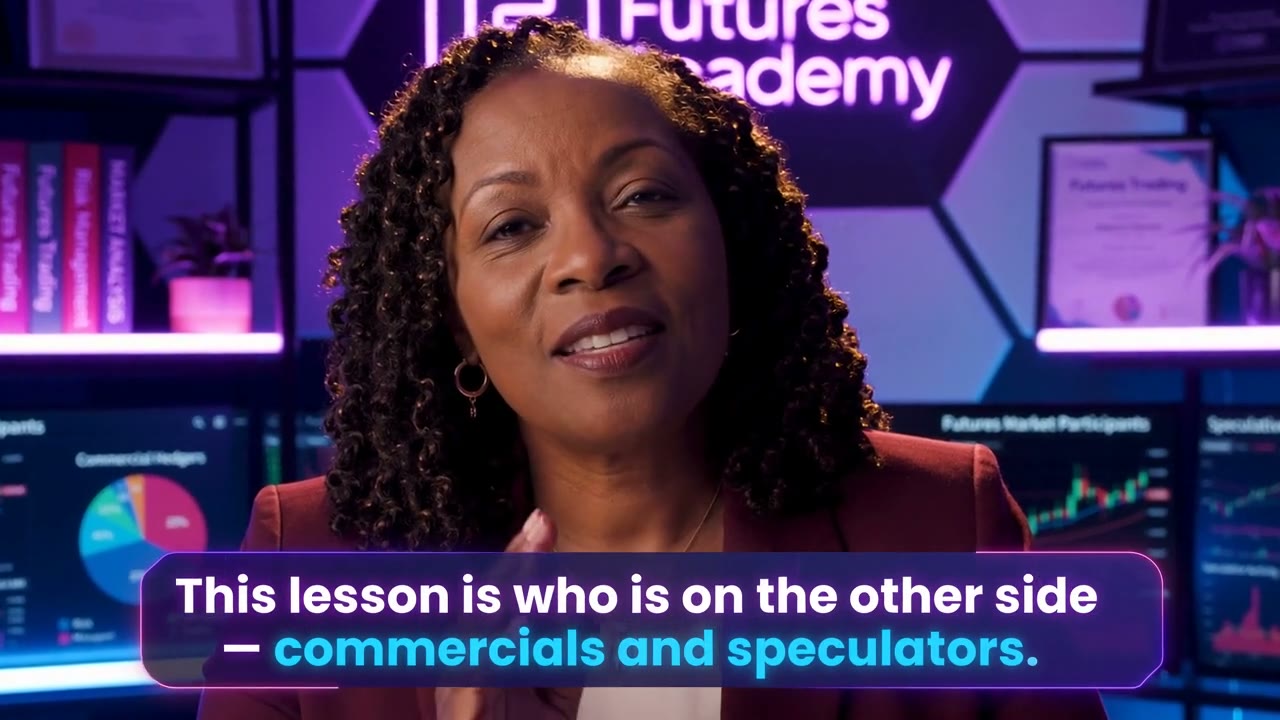
This video is part of Premium
Premium is not open yet. No Premium price is shown and nothing is charged until the owner opens it. The full lesson is below, and the audio is free right now.
Listen — free
The teacher's voice for this lesson (1:00). This lesson's audio is free.
Read the transcript
Welcome back to Futures. This lesson is who is on the other side: commercials and speculators. Every futures trade has two sides. When you buy a contract, someone else sells it. Knowing who is usually on the other side helps you read the market. Commercials are businesses with a real price risk outside the futures market. A farmer, an airline, or a food maker uses futures to protect costs or income they already depend on. Speculators are the other main group. They have no crop to sell or fuel to buy. They take a position because they hold a view on price, and they accept the risk that comes with it. Both groups need each other. Commercials bring real business hedging, speculators add trading and liquidity, and the exchange matches them in the same contracts, at the same prices. Remember: commercials trade to protect a business — speculators trade a price view. Now — try the quick quiz.
The two native species
Commercials (hedgers) use futures to insure real business exposure: farmers, airlines, miners, food companies (Lesson 4). Speculators — funds, trading firms, retail — accept that risk hoping for profit. Neither is 'smart money' by species: hedgers often accept small futures losses as an insurance cost while their physical business gains; speculators include both the best and worst traders alive.
The COT report
The US CFTC publishes a weekly Commitment of Traders report showing how commercials, large speculators, and small traders are positioned in aggregate, as of Tuesday's close, released Friday. Extremes matter more than levels: when speculators are more crowded long than almost ever before, the fuel for further buying is spent and reversals bite harder; commercials at record shorts often simply means producers are well-hedged into high prices — context, not a signal by itself.
How to use positioning honestly
COT is a weekly, delayed, aggregate snapshot — useful for background risk ('how crowded is my side?'), useless for timing entries. A workable rule: when your planned trade agrees with an already-record-crowded speculative position, demand a better entry or smaller size; when speculators are washed out against your idea, the path of least resistance may favor you. Positioning grades the neighborhood; your setup still has to knock.
Worked example — crowded long
A trader plans a long breakout in a metal where the COT shows large speculators at their most net-long in three years and price has run for six straight weeks. The setup is valid; the neighborhood is dangerous — everyone who wants to buy may already have. The plan adapts: half size, entry only on a pullback that holds, and a quicker first target. Positioning changed the terms, not the idea.
Remember this
- Hedgers transfer business risk; speculators accept it — both can be right for their own reasons.
- The weekly COT report shows aggregate positioning; extremes of crowding are its main message.
- Use positioning as background risk context, never as an entry trigger.
Check what you learned
Completion marks are saved on this device only.
SEO used on this page
| Page title | Set — Who Is on the Other Side: Commercials and Speculators — Futures | MyTradeCourse |
|---|---|
| Meta description | Set — Futures exist to transfer risk. Knowing who holds the other end explains a lot of price behavior. |
| Share picture | Set — https://mytradecourse.com/media/thumbs/mytradecourse-futures-other-side-lesson-thumbnail.jpg |
| Audio file | Set — /media/audio/mytradecourse-futures-other-side-lesson-audio.mp3 |
| Video file | Set — mytradecourse-futures-other-side-lesson.mp4 (Premium) |
| Captions | Set — /media/captions/mytradecourse-futures-other-side-lesson-captions.vtt |
| Transcript | Set — shown on this page under Listen |
| Structured data | Set — LearningResource + VideoObject |