Specializing: Picking Your Two Pairs
Forex Advanced About 5 min Audio free Video · Premium
Mastery in forex is narrow before it is broad. Two pairs, known deeply, beat seven pairs skimmed.
Watch your teacher
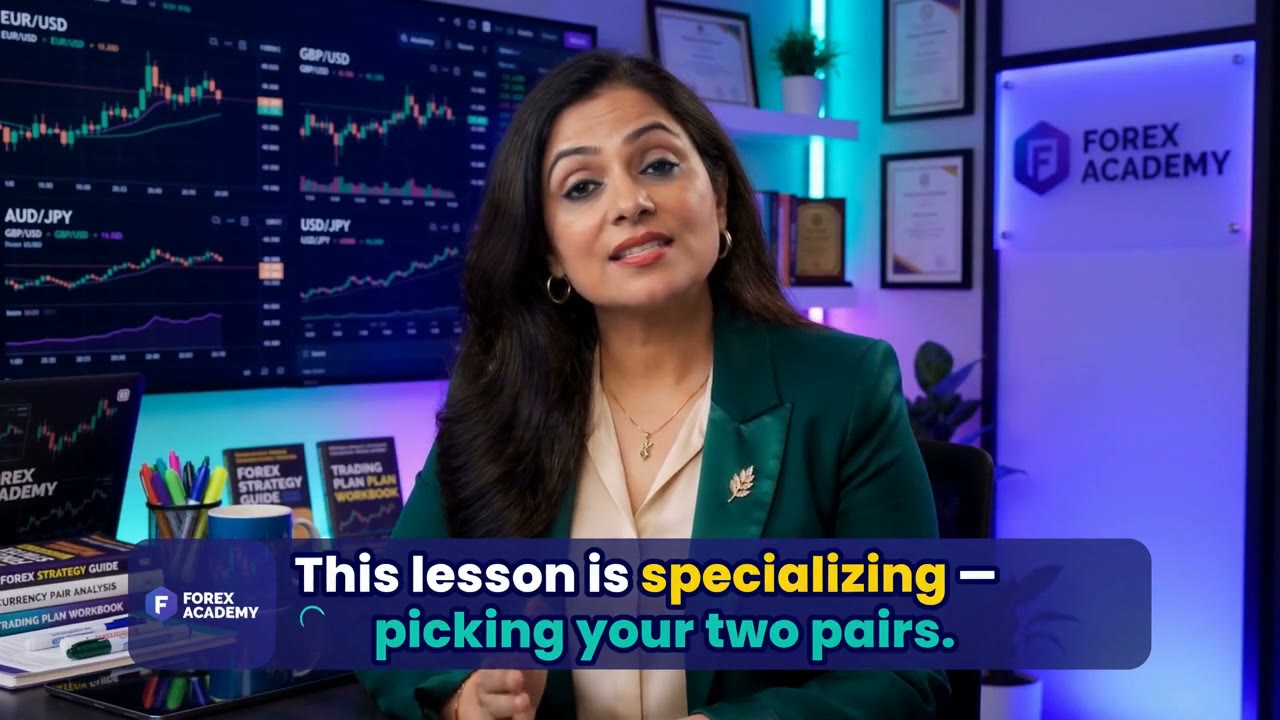
This video is part of Premium
Premium is not open yet. No Premium price is shown and nothing is charged until the owner opens it. The full lesson is below, and the audio is free right now.
Listen — free
The teacher's voice for this lesson (1:00). This lesson's audio is free.
Read the transcript
Welcome back to Forex. This lesson is specializing — picking your two pairs. Specializing means you focus on just two pairs. You learn how those pairs move. You stop chasing every pair on the screen. Pick pairs you can watch in your session. Choose pairs with clear spreads. Choose pairs you can explain in plain words. Two pairs work better than ten. You learn their habits and their hours. You notice when their normal moves change. Journal only those two pairs at first. Review them by pair and session. Add another pair only when your routine is steady. Remember — pick two pairs, learn them well, and stay focused. Now — try the quick quiz.
What 'knowing a pair' means
You know a pair when you can answer without looking: its typical daily range this month, its average spread in your session, its swap both ways, which releases move it violently, what it's correlated with, and how it behaved in the last three big risk-off days. That knowledge is pair-specific capital — it does not transfer to the next pair, which is exactly why spreading across seven pairs keeps you a beginner seven times.
Choosing your two
Criteria: a major pair (tight spreads, deep liquidity, honest behavior) that is active during YOUR available hours — a pair whose main session you never see will teach you its quiet hours only. One trend-prone and one range-prone character makes a good pair of pairs (for example, a yen cross for trends and a European major for ranges — characters drift, so re-verify quarterly). Your journal's per-pair review (Lesson 15) makes the final call with your own data.
The guest-pair rule
Specialization is not a prison: other pairs may appear when their A+ setup shows. But guest trades follow stricter rules — half size, best setup only, and a journal tag. Most learners find their guest trades underperform their home pairs by enough that the rule eventually becomes simple: home pairs only.
Worked example — the narrowing
Six months of journal data across six pairs: EUR/USD +9R (31 trades), USD/JPY +6R (24), GBP/USD −1R (18), AUD/USD −4R (15), EUR/GBP −3R (12), USD/CAD −2R (9). Total +5R — but the top two pairs alone are +15R. The trader's next quarter trades only those two and discovers the strangest thing: fewer trades, more profit, calmer evenings.
Try it yourself
From your journal in MyTradeDiary (free), rank every pair you've practiced by total R and trade count. Pick your two home pairs for the next quarter and write the choice — and the guest-pair rule — into your plan.
Remember this
- Pair knowledge (ranges, spreads, catalysts, character) is specific capital — narrow beats broad.
- Choose majors active in your hours; one trend-prone, one range-prone is a strong mix.
- Let your own per-pair journal data make the final selection.
- Guest pairs: best setup only, half size, tagged in the journal.
Check what you learned
Completion marks are saved on this device only.
SEO used on this page
| Page title | Set — Specializing: Picking Your Two Pairs — Forex | MyTradeCourse |
|---|---|
| Meta description | Set — Mastery in forex is narrow before it is broad. Two pairs, known deeply, beat seven pairs skimmed. |
| Share picture | Set — https://mytradecourse.com/media/thumbs/mytradecourse-forex-specializing-lesson-thumbnail.jpg |
| Audio file | Set — /media/audio/mytradecourse-forex-specializing-lesson-audio.mp3 |
| Video file | Set — mytradecourse-forex-specializing-lesson.mp4 (Premium) |
| Captions | Set — /media/captions/mytradecourse-forex-specializing-lesson-captions.vtt |
| Transcript | Set — shown on this page under Listen |
| Structured data | Set — LearningResource + VideoObject |