Staking and Yield, Without the Hype
Crypto Intermediate About 5 min Audio free Video · Premium
Staking pays you for securing a network — or for lending to someone who hopes to pay you back. Learn to tell them apart.
Watch your teacher
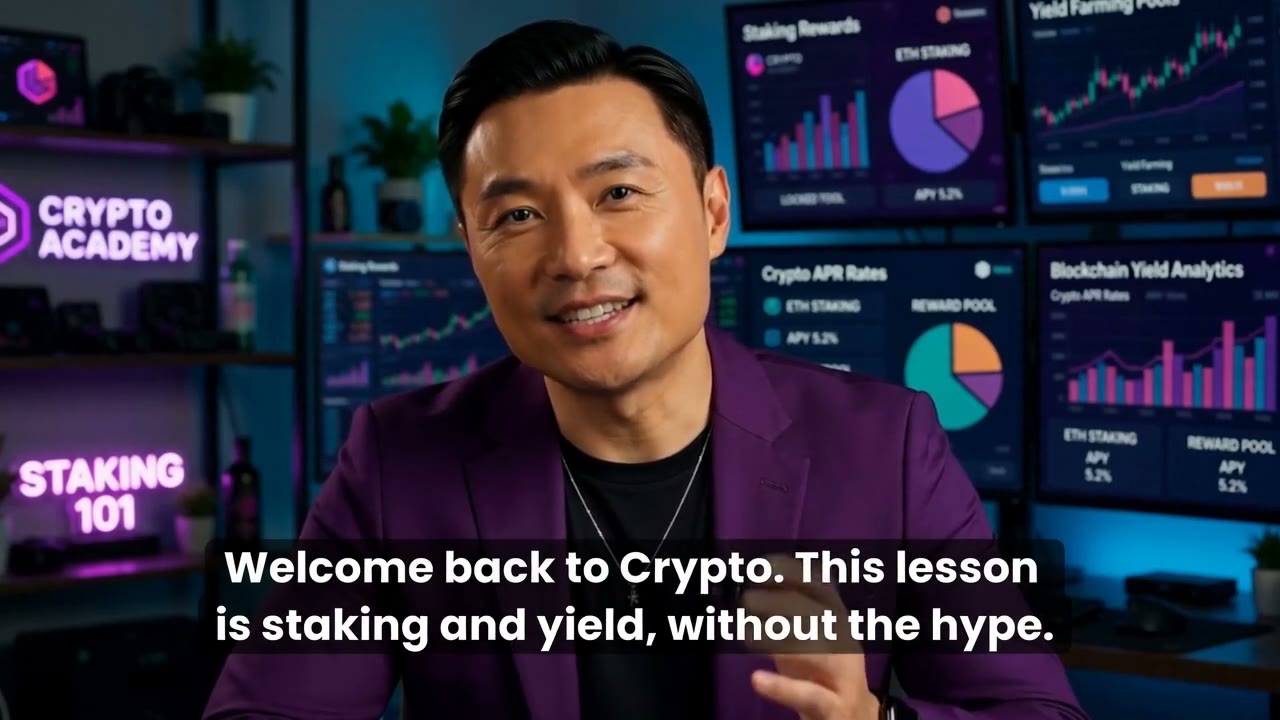
This video is part of Premium
Premium is not open yet. No Premium price is shown and nothing is charged until the owner opens it. The full lesson is below, and the audio is free right now.
Listen — free
The teacher's voice for this lesson (1:00). This lesson's audio is free.
Read the transcript
Welcome back to Crypto. This lesson is staking and yield, without the hype. Staking means locking crypto to help run a network. In return, the network may pay a reward. The reward is not guaranteed by a bank. Yield is the extra return a platform shows. It can come from staking, lending, or other activity. Always ask where the yield comes from. Higher yield usually means higher risk. Coins can be locked for days or months. Price can fall while you wait, and rewards can change. Read the terms before you stake. Check the lock time, the fees, and how you exit. Start small and keep records of every reward. Remember — staking pays for helping the network, not free money. Now — try the quick quiz.
Protocol staking: what the yield actually is
In proof-of-stake networks, validators lock tokens to help run the chain and are paid in newly issued tokens plus fees. Staking directly (or through a reputable pool) earns that protocol yield — real, but with terms: lockup/unbonding periods (days to weeks where your tokens can't move), slashing risk (a misbehaving validator loses a slice of stake), and the price risk of the token itself, which dwarfs the yield in most months. A 5% yield on an asset that falls 40% is not an income strategy.
Lending yield: a different animal wearing the same APY
When an exchange or platform offers 'staking' yield on Bitcoin or stablecoins, no protocol is being secured — your assets are being lent out (to traders, funds, or the platform's own book) and the yield is interest on credit risk. The 2022 lender collapses paid double-digit 'yields' until the loans defaulted and withdrawals froze — depositors learned they were unsecured creditors. The diagnostic question is always: who is paying this, from what activity, and what happens to my principal if they fail?
A sober staking checklist
Prefer protocol staking on networks you actually hold long-term; know the unbonding period before you need the money; keep staked size proportional (yield chasing flips the risk hierarchy — the tail wagging the position); count yield net of token inflation (if supply inflates 6% and you earn 5%, your share of the network shrank); and never let yield decide custody — 'earn' programs that require surrendering keys for lending yield convert your asset into someone else's promise.
Worked example — the yield that cost 96%
A platform offers 18% on a stablecoin. The rate is paid from loans to trading firms. A firm defaults in a market crash; the platform freezes withdrawals, then files for bankruptcy; depositors recover cents on the dollar over years. The 18% was never a return on cash — it was the market price of exactly the risk that materialized. Meanwhile boring protocol staking at 4–5% on a held-anyway asset, with known lockups, remains what it claimed to be: modest, real, and subordinate to the asset decision.
Remember this
- Protocol staking = paid by a network for security work, with lockups and slashing terms.
- Platform 'yield' on BTC/stablecoins = lending. You are an unsecured creditor; price the credit, not the APY.
- Yield never outruns the asset: 5% on a −40% token is a −37% year with extra steps.
- Count yield net of token inflation, and never let yield choose your custody.
Check what you learned
Completion marks are saved on this device only.
SEO used on this page
| Page title | Set — Staking and Yield, Without the Hype — Crypto | MyTradeCourse |
|---|---|
| Meta description | Set — Staking pays you for securing a network — or for lending to someone who hopes to pay you back. Learn to tell them apart. |
| Share picture | Set — https://mytradecourse.com/media/thumbs/mytradecourse-crypto-staking-lesson-thumbnail.jpg |
| Audio file | Set — /media/audio/mytradecourse-crypto-staking-lesson-audio.mp3 |
| Video file | Set — mytradecourse-crypto-staking-lesson.mp4 (Premium) |
| Captions | Set — /media/captions/mytradecourse-crypto-staking-lesson-captions.vtt |
| Transcript | Set — shown on this page under Listen |
| Structured data | Set — LearningResource + VideoObject |